A Brief History of Gold Mining in the Caribbean
The 19th-Century Caribbean Economic Transition
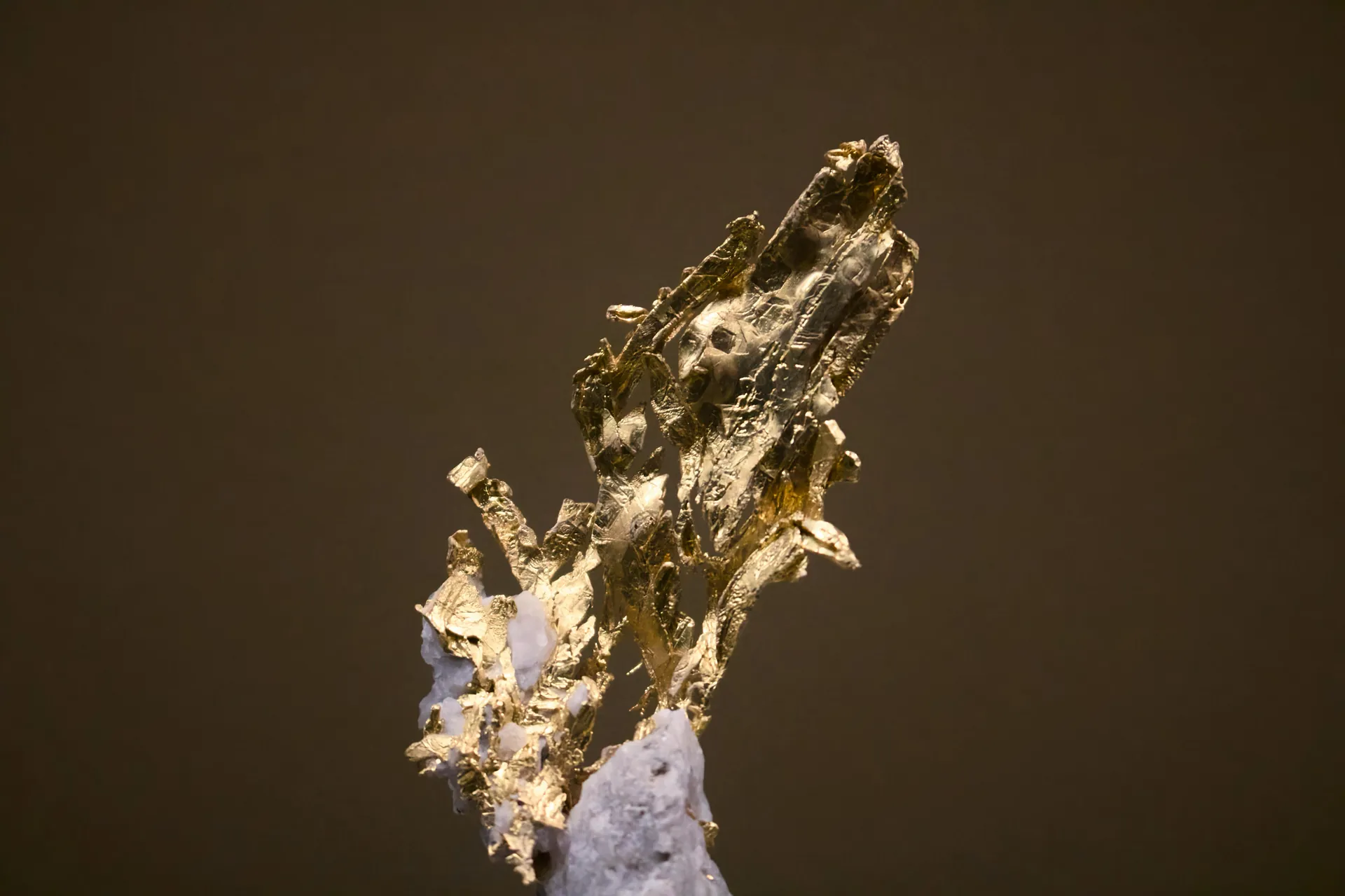
For centuries, the Caribbean economy functioned as a mono-crop machine, fueled by the “Sugar King” era where vast plantations dominated the fertile plains of the Greater and Lesser Antilles. However, by the early 1800s, this agricultural monopoly began to fracture under the weight of soil exhaustion, the rise of European beet sugar, and the moral and legal collapse of the Atlantic slave trade. As colonial powers sought new commodities to stabilize their dwindling West Indian treasuries, the focus shifted from the surface of the earth to the minerals buried beneath it. This transition marked a significant pivot toward industrial extraction, positioning islands like Aruba as experimental frontiers for mineral investment. Unlike the lush, plantation-heavy islands of the south, the Aruban landscape offered a different kind of bounty: high-grade gold ore trapped within stubborn quartz.
Aruba’s emergence as a mineral interest within the Dutch Caribbean context was not immediate. While the Spanish had historically ignored the “Islas Inútiles” (Useless Islands) due to their lack of freshwater and tillable soil, the 19th-century industrial revolution provided the technological means to exploit the island’s arid, igneous terrain. The Caribbean became a testing ground for imported machinery, where European capital met American mining techniques. The ruins at Bushiribana are not merely a scenic landmark; they represent the physical manifestation of this global economic shift, where the trade winds that once moved sugar ships were now cooling the steam engines of massive stamp mills.
The transition from sugar to gold in the 1820s redefined the Caribbean’s industrial value, shifting the focus from the plantation to the processing mill.
The Rooi Fluit Catalyst (1824)
The trajectory of Aruba’s history changed in 1824 through a singular, accidental event. Willem Rasmijn, a young boy herding sheep along the island’s north coast, discovered a glinting stone in the Rooi Fluit—a seasonal stream bed that carves through the rocky shoreline. This discovery of gold ore was not the result of a geological survey, but of sheer proximity to the island’s raw mineral veins. The Rooi Fluit discovery acted as a catalyst, transforming the north coast from a desolate grazing land into a site of frantic industrial potential. Detailed records of this era can be explored in our Aruban Gold Rush Chronicles.
Industrial Transformation
The aftermath of the 1824 discovery was a chaotic period of localized prospecting, but the geological reality of the gold—trapped in hard rock—soon demanded more than hand tools. The Dutch colonial government recognized that significant revenue required organized oversight. This led to the construction of the Bushiribana Stone Fortress in 1874, a massive processing hub designed to withstand both the relentless Atlantic spray and potential incursions. The mill was the heart of a new industrial ecosystem that drew laborers and engineers from across the Atlantic world.
The Era of the “Free-for-All” Prospector
In the months following Rasmijn’s find, the island entered a period of democratic extraction. The government initially permitted local residents to scour the gullies and dry creek beds, provided they adhered to a strict monopoly system. All gold found had to be sold to the colonial administration at a fixed price. This provided a critical socio-economic lifeline for Aruban families, many of whom had previously relied on subsistence goat farming or salt harvesting. It was a brief window of “easy gold” where the islanders could directly benefit from the mineral wealth under their feet.
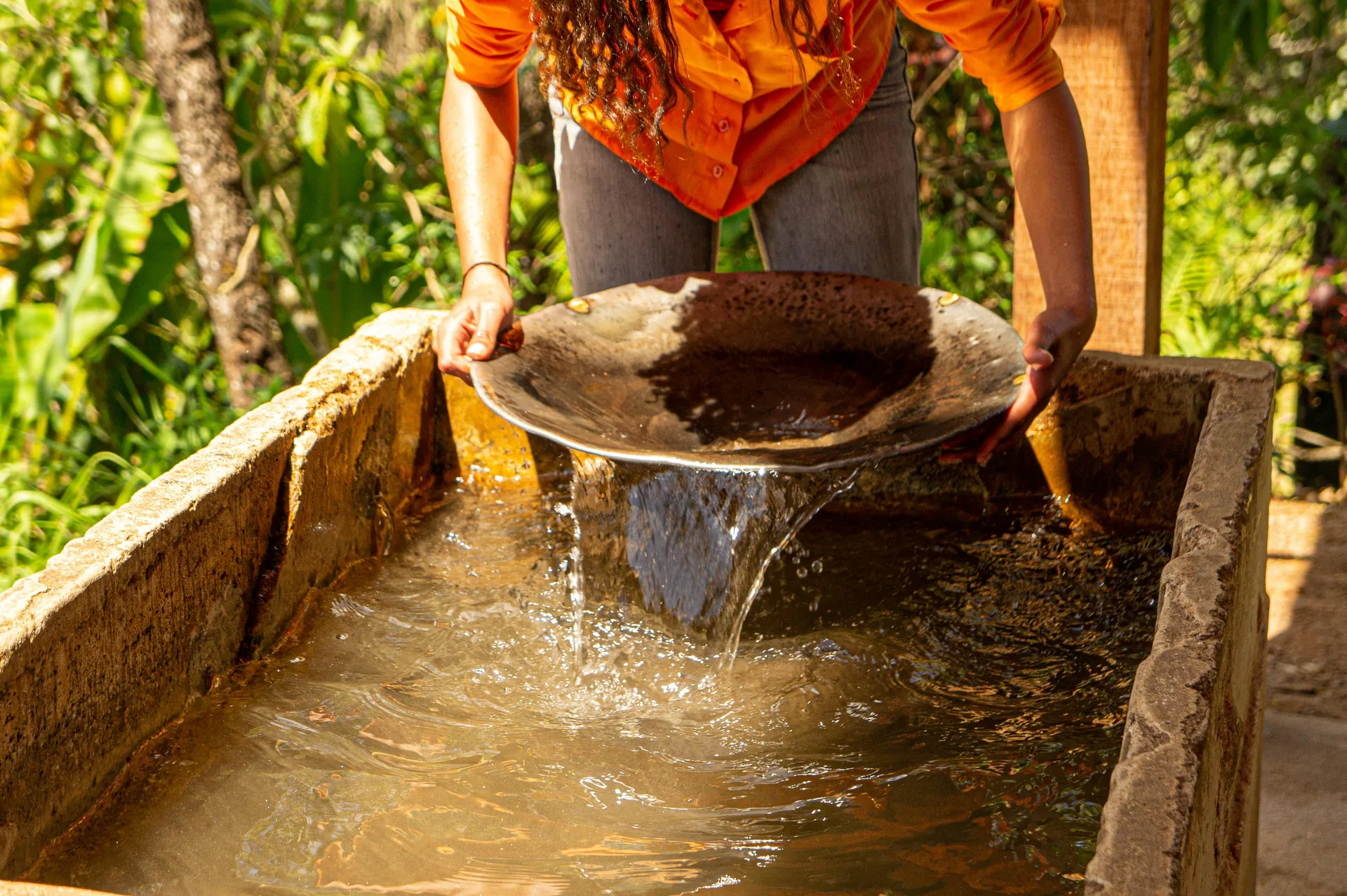
However, as the surface deposits were depleted, the era of the individual prospector faded. By the mid-19th century, the government began granting exclusive concessions to foreign corporations, most notably the Aruba Island Gold Mining Company Ltd. This British-financed venture brought professional miners from the British West Indies and Cornwall to the island. To understand the treacherous terrain these men navigated daily, visitors should review our guide to Driving in Aruba’s North Coast, where the same volcanic cliffs and trade winds still dominate the experience.
| Region | Primary Mineral | Extraction Method | Peak Production |
|---|---|---|---|
| Aruba | Quartz-bound Gold | Industrial Stamp Milling | 1824–1916 |
| Hispaniola | Alluvial Gold | River Panning/Surface | 1500s (Early Spanish) |
| Cuba | Copper | Deep Shaft Mining | 1830s–1860s |
| Jamaica | Bauxite/Sugar | Open Pit (Later Era) | 19th Century (Sugar) |
Geology of the Aruba Batholith
The fundamental reason for Aruba’s gold rush lies in its geological basement. The island is largely defined by the Aruba Batholith, a massive formation of igneous rock that rose from the earth’s mantle millions of years ago. As this molten rock cooled beneath the surface, hydrothermal fluids rich in silica and gold were forced into fractures, creating the quartz veins that would eventually attract 19th-century investors. Unlike the softer coral limestone found on the southern side of the island, the north coast is a rugged fortress of diorite and volcanic rock, shaped by the relentless pounding of the Caribbean Sea. For a deeper look at these formations, visit our post on Aruba’s Rugged Shoreline.
This geological composition dictated the failure of early panning efforts. While the Spanish found “easy gold” in the riverbeds of Hispaniola and Puerto Rico—where the elements had already done the work of breaking down the rock—Aruba’s gold was stubborn. It was locked in a hard crystalline basement, requiring the heavy impact of a 10-stamp mill. These iron pestles, powered by steam, dropped rhythmically onto the ore, a sound that could be heard for miles along the desolate northern coastline. The sheer energy required to pulverize this rock is why the Bushiribana ruins are so massive; they weren’t just a factory, they were a fortification against the elements and the unyielding nature of the Batholith itself.
The Aruban gold rush was a triumph of industrial engineering over geological resistance, requiring imported technology to unlock the island’s hard-rock treasure.
Quartz Veins vs. Alluvial Deposits: A Caribbean Comparison
The technical difficulty of Aruban mining cannot be overstated when compared to other regional efforts. In the Greater Antilles, 16th-century mining relied heavily on enslaved indigenous labor to sift through alluvial deposits—surface gold washed into rivers by rainfall. This was high-margin, low-tech extraction. Aruba, by contrast, represented the industrialization of Caribbean mining. Because the gold was trapped in quartz veins in the Matividiri and Ceru Plat districts, it required a complex logistics chain. Ore was transported via donkey carts to the Bushiribana mill, where it underwent mechanical crushing.
Eventually, even the powerful stamps at Bushiribana were superseded by more efficient technology. By 1899, the Balashi Gold Smelter was constructed, utilizing the McArthur-Forrest Cyanide Process. This chemical method allowed for the extraction of gold from lower-grade ore that the mechanical stamps simply couldn’t process. This evolution from the “free-for-all” scavenging of 1824 to the chemical engineering of the early 1900s mirrors the broader global trend of industrialization, where profit was no longer found in the glint of a stream bed, but in the efficiency of the laboratory. Before you head out to see these sites, check our Essential Visitor Planning to ensure you are prepared for the intense island sun.
Explore the Gold Coast

Aruba UTV, ATV Adventure to Secret Beach and Cave Pool
⭐ Aruba Experience
🔥 Likely to sell out soon!

Aruba UTV Tour with Natural Cave Pool and Cliff Jumping
⭐ Aruba Experience
🔥 Over 4657 reviews – Verified quality

Aruba Jeep Tour: Natural Pool, Caves and Baby Beach Adventure
⭐ Aruba Experience
🔥 Free cancellation for flexible planning

National Park Arikok Jeep Safari Adventures
⭐ National Experience
🔥 Likely to sell out soon!

Wild Side UTV Tour: Explore the Northern treasure
⭐ Wild Experience
🔥 Bestseller in 2026

Horseback Ride Tour to Natural Pool in Arikok National Park
⭐ Horseback Experience
🔥 Bestseller in 2026
Frequently Asked Questions
- When was gold first discovered in Aruba? The Aruban gold rush officially began in 1824 when a young boy named Willem Rasmijn discovered ore while herding sheep in the Rooi Fluit stream bed. This accidental find immediately transitioned the island’s economy from agriculture and ranching to mineral extraction.
- How much gold did Aruba produce during the rush? Over the course of nearly a century of mining operations, the island produced approximately 1.5 million pounds of gold. The majority of this wealth was processed at the Bushiribana and later the Balashi smelting facilities before being exported.
- Was Aruba the only Caribbean island with a significant gold rush? While Hispaniola and Puerto Rico had earlier, surface-level rushes during the Spanish colonial era, Aruba’s 19th-century rush was unique for its focus on hard-rock quartz mining. This required a level of industrial technology and foreign investment that was rare in the region at the time.
- Can you still find gold at the Bushiribana ruins today? While the mines have been closed for over a century and the site is a protected historical monument with free, open-air access 24/7, no significant gold remains for casual prospectors. It is strictly prohibited by Aruban law to remove stones, sand, or historical artifacts from the site or the surrounding north coast.
- What is the Aruba Batholith and why is it important? The Aruba Batholith is a massive igneous rock formation that constitutes the geological foundation of the island. Its volcanic origins millions of years ago trapped precious metals in quartz veins, which were eventually exposed by erosion and led to the 19th-century mining boom.